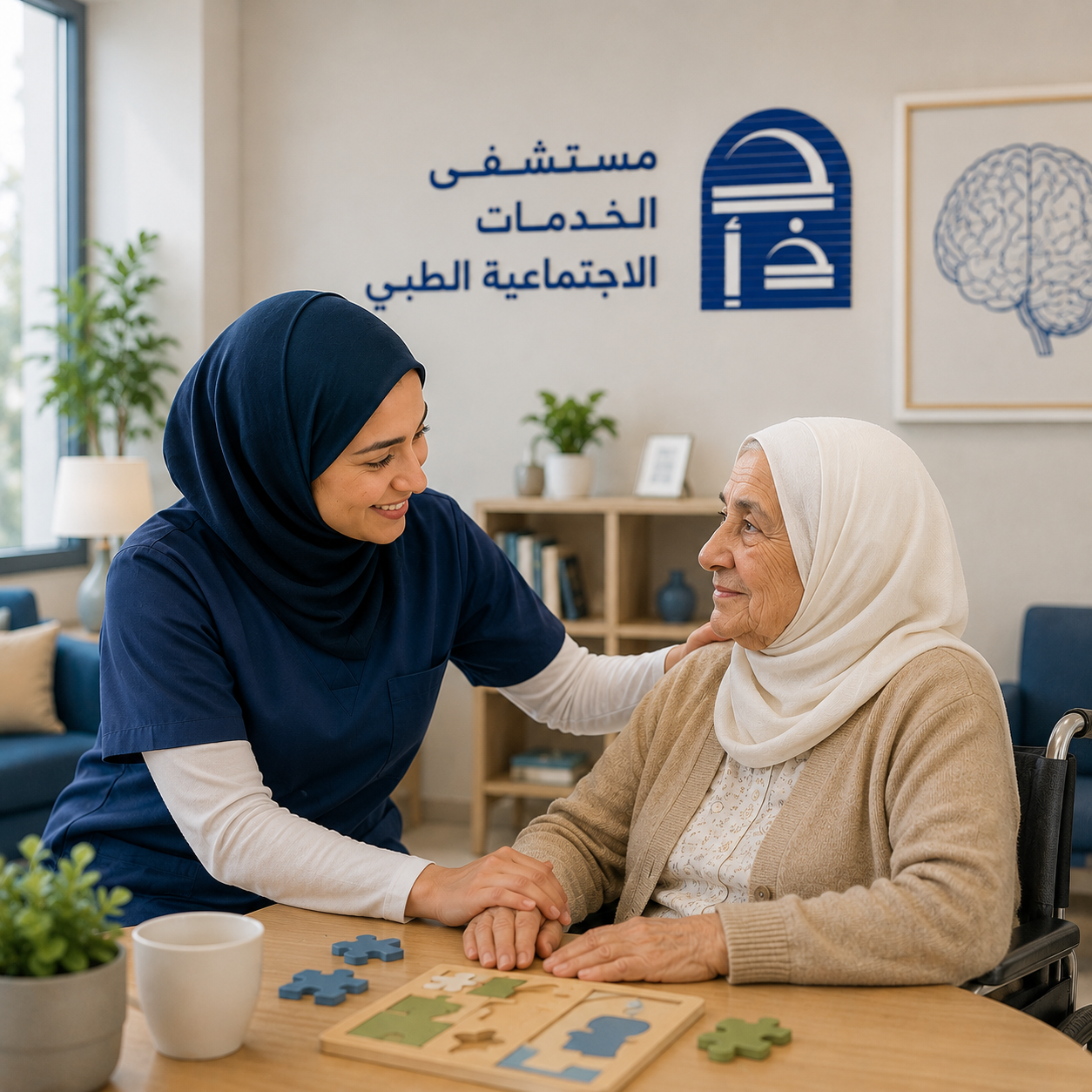
The Alzheimer’s section provides specialized care that addresses the physical, psychological, and cognitive needs of patients, helping enhance their daily quality of life through the following:
Psychological Support and Anxiety Reduction
Safe and Comfortable Environment
Providing a safe and comfortable environment that helps reduce stress and confusion.
Familiar and Enjoyable Activities
Engaging patients in familiar and enjoyable activities that promote reassurance and emotional stability.
Meeting Basic Needs
Meeting the patient’s basic needs—such as nutrition, hydration, and personal care—to ensure comfort and maintain as much independence as possible.
Compassionate Communication
Avoiding arguments with the patient and adopting an approach based on patience, compassion, and understanding.
Attentive Listening
Practicing attentive listening to identify the patient’s thoughts and detect any changes in behavior or emotional state.
Enhancing Physical and Cognitive Abilities
● Following up on appropriate physical exercises to maintain mobility and functional strength.
● Implementing memory exercises and cognitive stimulation activities to support cognitive functioning.
● Organizing conversational sessions that help patients express and release their emotions in a healthy manner.
Comprehensive Medical Follow-Up
● Monitoring any symptoms that appear, while considering the possibility of accompanying medical conditions such as diabetes, kidney disease, heart disease, and others.
● Identifying the underlying causes of any behavioral or health changes, since Alzheimer’s is not always the only source of disturbance.
● Supporting patients in adapting to their condition and encouraging participation in programs that stimulate memory and thinking, which helps reduce anxiety associated with forgetfulness.


 Elderly Care Section
 Alzheimer’s Section
 Paralysis and Rehabilitation Section
 Psychiatric Disorders Section
 Outpatient Clinics
 Radiology Center
 Medical Laboratory
 Workshop Mission
 Candle Crafts
 Handicrafts